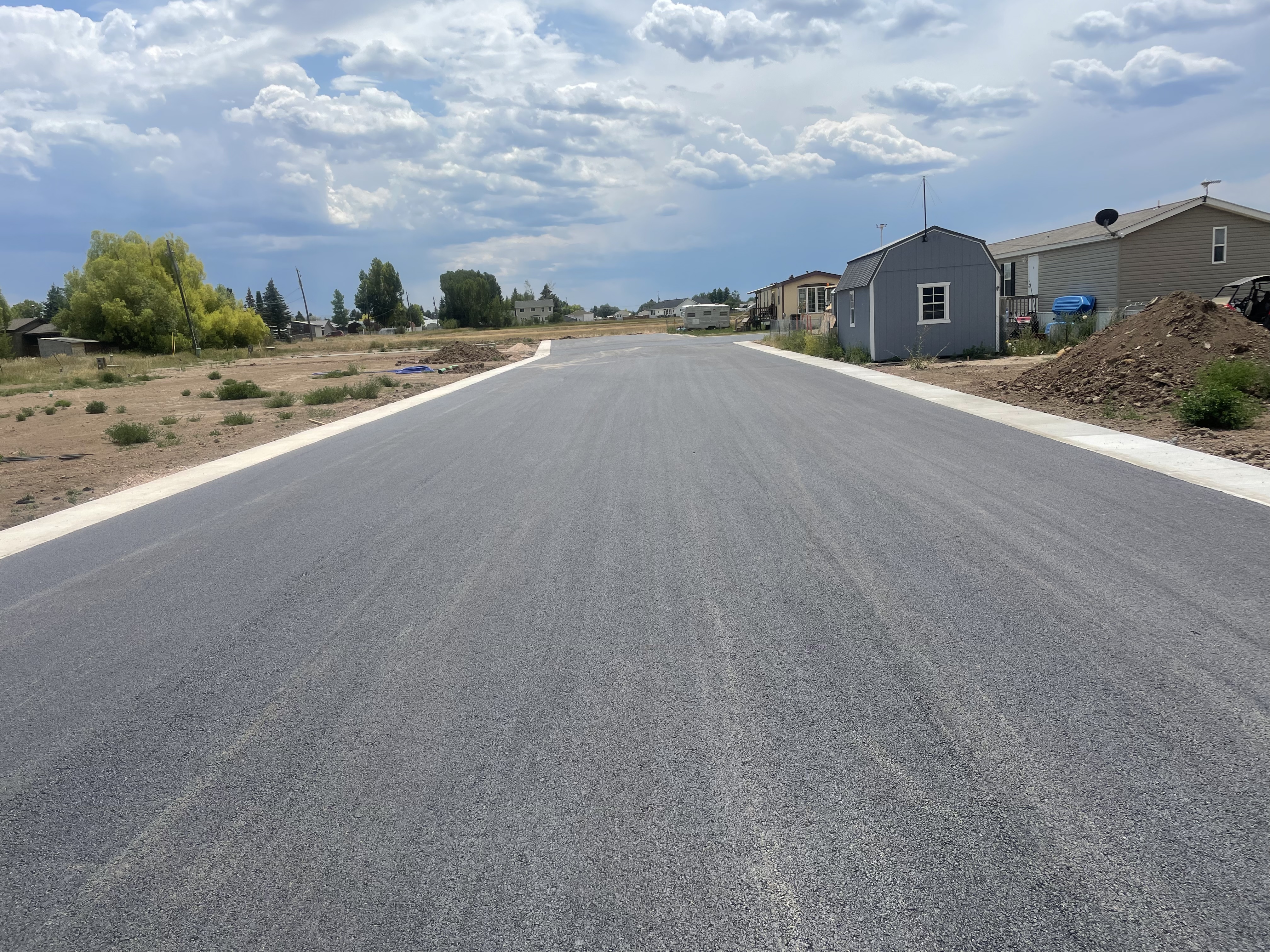
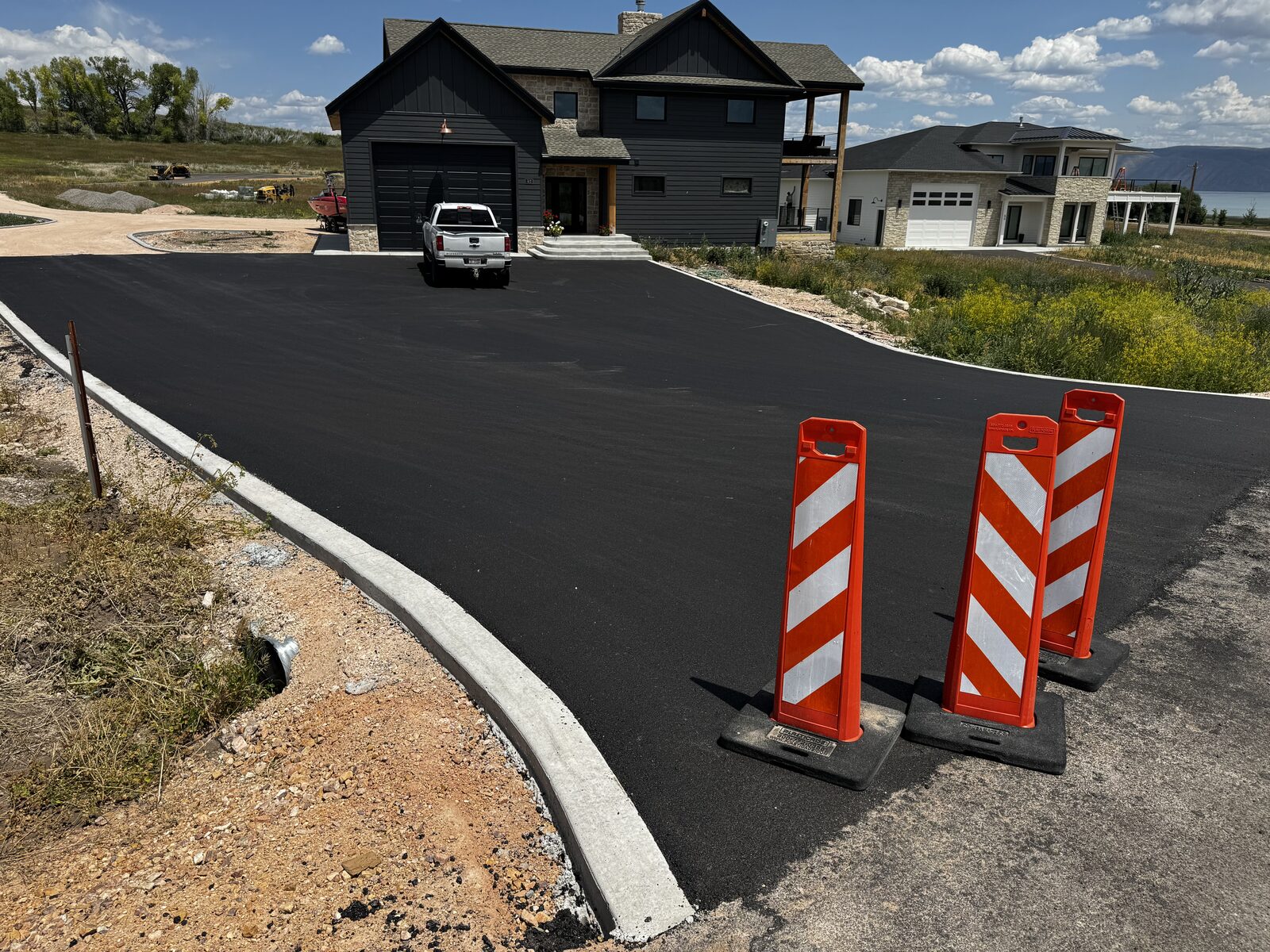
Drive around Bear Lake in October and you'll pass hundreds of cabins sitting at the end of a gravel or dirt lane. Most of those driveways have been gravel for decades — and every fall we get the same question from owners buttoning up for winter: is it finally worth paving this thing?
We're 3H Paving, a family-run crew that works the Bear Lake Valley and the rest of northern Utah, and we'll give you the straight version. Converting a gravel cabin driveway to asphalt is one of the better upgrades you can make up here — but only if you go in knowing the real cost, the permits, and what a proper job actually involves. Here's what to check before you spend a dollar.
Why so many Bear Lake cabins still have gravel
Gravel is cheap to put down and easy to add to, which is why it's everywhere around Garden City, Fish Haven, and the cabin communities up the canyons. But gravel asks for work every single year, and Bear Lake is harder on it than most places:
- Washboarding and ruts from summer traffic and spring runoff
- Dust that coats the cabin, the cars, and the deck all season
- Plow scrape — a snowplow peels gravel off the surface and throws it into the yard every winter
- Regrading you either pay for or do yourself, usually more than once a year
- Mud season in spring, when the frost comes out and a dirt lane turns soft
None of that is a disaster on its own. Added up over ten years, though, it's real money and real weekends — and it's why a lot of owners decide to pave once and be done.
Gravel vs. asphalt: what you gain and what you give up
Asphalt isn't automatically the right call for every property. Here's the honest trade:
- You gain: no dust, no annual regrading, a surface that sheds water and plows clean, better traction on a grade, and a noticeable bump in curb appeal when you list or rent the cabin.
- You give up: the low upfront cost of gravel, and some flexibility — a paved surface is a commitment, and it needs sealcoating every few years to hit its full lifespan.
Nationally in 2026, a new asphalt driveway runs roughly $7 to $15 per square foot installed, versus about $1.25 to $4 per square foot for gravel, according to NerdWallet's 2026 repaving guide. So yes, asphalt costs several times more up front. The question is whether you're tired enough of the gravel treadmill to pay for the upgrade. If you're also weighing concrete, we broke that decision down in asphalt vs. concrete for your driveway.
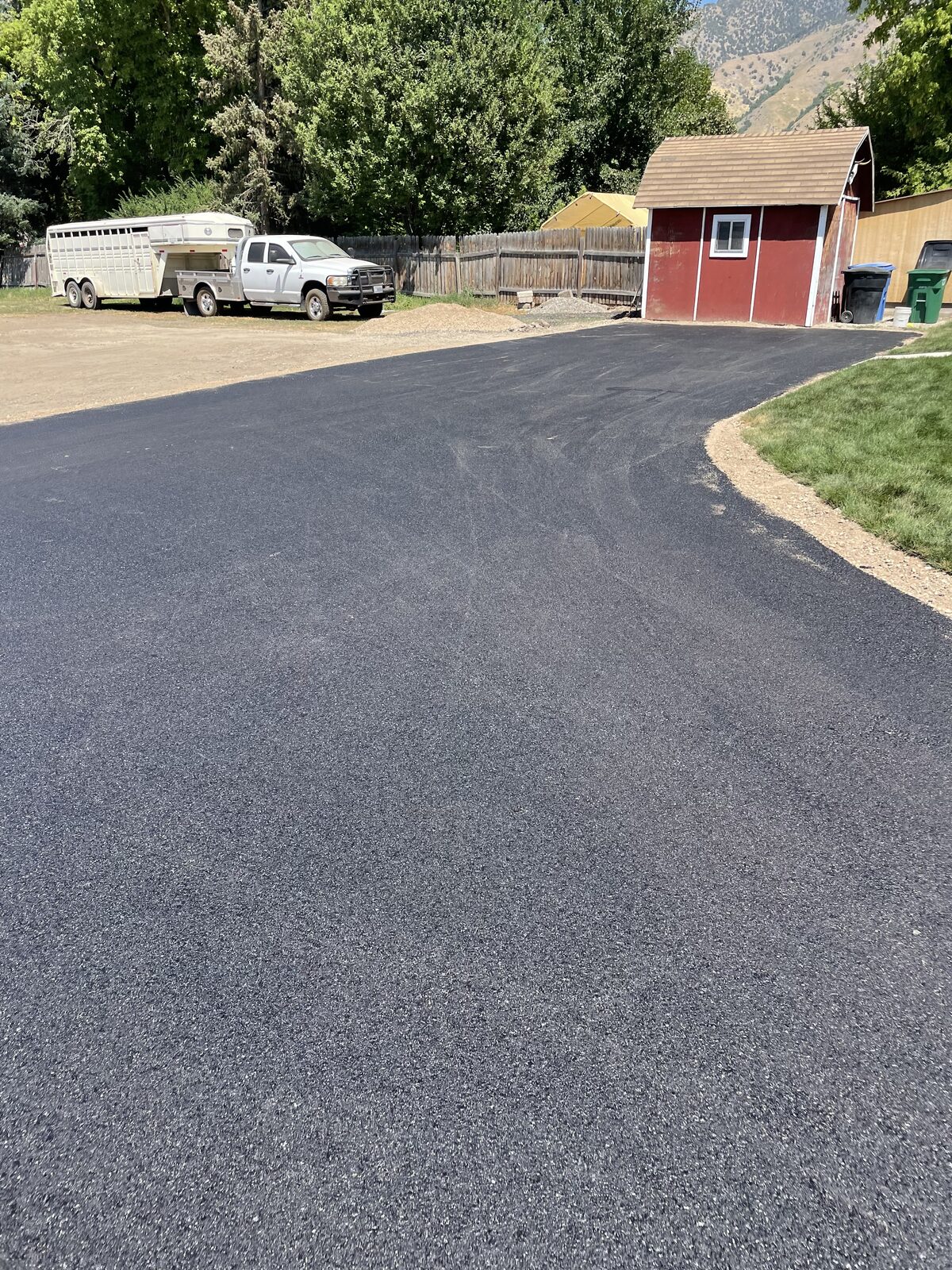
What it costs to pave a gravel driveway at Bear Lake
Expect Bear Lake to land on the higher end of — or a bit above — those national numbers. A few things push the price up here that you won't fight in the valley:
- Hauling distance. Hot asphalt has to come from a plant and stay hot. Bear Lake is a long haul from the nearest plants, and that trucking time gets built into the quote.
- A short season. Our paving window is tight — crews book up fast in late summer and fall, and rush or shoulder-season work rarely saves money.
- Material costs. Liquid asphalt binder can make up as much as 40% of an asphalt mix's value and tracks crude oil prices, so 2026's oil swings flow straight into paving quotes. Skilled paving labor is also up about 4.5% year over year, per industry cost tracking.
- Base work. A gravel lane usually needs real grading and base prep before any asphalt goes down — that's part of the job, not an afterthought.
We don't publish a flat per-foot number because no two cabin lanes are the same — length, slope, drainage, and how much base work you need all move the figure. For a fuller breakdown of how Utah asphalt pricing is built, see our 2026 Utah asphalt cost guide, then get a written quote for your specific driveway.
Permits and rules to check before you pave
This is the step people skip and regret. Where your driveway meets the road decides who you answer to. A quick note first: paving rules are local and change, so treat the below as a starting point and confirm with the agency that applies to you.
If your driveway meets a state highway (US-89 or SR-30)
US-89 and SR-30 are state highways running right through the Bear Lake area, and UDOT controls the right-of-way along them. Utah Code 72-7-102 prohibits digging or excavating within the state right-of-way to build or maintain an approach or driveway without a permit. If your new approach ties into one of those highways, you'll likely need a UDOT encroachment (access) permit — applications go through udot.utah.gov/public/olp. A licensed paving contractor handles this kind of thing routinely.
If your driveway meets a city or county road
Most cabin lanes tie into a local road, not a highway. In Garden City, the city uses a Street/Driveway Planning Application and asks that building permits be filed online; their main line is (435) 946-2901. Outside city limits you're dealing with Rich County. If your cabin sits on the Idaho side of the lake, those approvals run through Bear Lake County, Idaho instead — so call the right office before you dig.
Make sure your contractor is actually licensed
Utah's paving classification is the S260 Asphalt and Concrete Contractor license, and anyone paving your driveway for pay should hold it (or work under a general contractor who does). You can verify any contractor's license for free at dopl.utah.gov before you sign. We cover what our work includes on our warranty page — always get the coverage in writing.
One more thing worth a mention: a paved surface is impervious, so if you're adding a lot of hard surface, ask your city or county whether any stormwater or drainage rules apply, and if you're in an HOA, check its driveway standards.
How we approach a gravel-to-asphalt conversion
A driveway is only as good as what's under it. When we convert a gravel lane, the asphalt is the last step — the work that makes it last happens first:
- Grade and shape the lane so water runs off instead of pooling — critical with Bear Lake's freeze-thaw cycles.
- Build and compact a proper base so the surface doesn't rut or crack in its first winter.
- Sort out drainage at the low spots and the road edge before anything gets paved.
- Lay and compact the asphalt, typically a few inches over a solid base for a residential driveway.
- Plan the timing. Fall slots fill fast up here, and you want it cured before the snow flies — we covered the seasonal window in the best time to pave or sealcoat your Bear Lake driveway.
We serve the whole Bear Lake Valley and the surrounding region, so whether your cabin is in Garden City, up a canyon, or across the line in Idaho, we can take a look.
So, is it worth paving?
If you're keeping the cabin for years, hauling in gravel every spring, and fighting dust and plow scrape, paving usually pays you back in saved maintenance and a surface that actually holds up. If the cabin's a short-term hold or the budget's tight this year, a well-graded gravel lane is a reasonable place to wait. Either way, the smart move is to get a real number before you decide.
Want a straight answer for your specific driveway? Get a free estimate or call us at (435) 310-4694 — written quote, no pressure, and we'll tell you honestly whether paving makes sense this year.
Frequently asked questions
Can you pave asphalt right over my existing gravel driveway?
Sometimes, but usually not without prep. Existing compacted gravel can serve as part of the base, but most gravel lanes need regrading, added base material, and proper compaction first so the asphalt doesn't rut or crack. We evaluate the existing surface and tell you honestly what base work it needs before quoting.
How much does it cost to pave a gravel driveway at Bear Lake?
Nationally in 2026 a new asphalt driveway runs roughly $7 to $15 per square foot installed, and Bear Lake typically lands on the higher end or a bit above because of hauling distance, a short paving season, and base prep. Because length, slope, and drainage vary so much on cabin lanes, we quote each driveway individually rather than using a flat per-foot price.
Do I need a permit to pave my driveway at Bear Lake?
It depends on which road your driveway meets. If it ties into a state highway like US-89 or SR-30, you'll likely need a UDOT encroachment permit, because Utah Code 72-7-102 prohibits work in the state right-of-way without one. If it meets a local road, approval runs through Garden City, Rich County, or Bear Lake County, Idaho on the Idaho side. Rules change, so confirm with the agency that applies to your property.
How do I check that an asphalt contractor is licensed in Utah?
Utah's paving classification is the S260 Asphalt and Concrete Contractor license. You can verify any contractor's license for free through Utah's Division of Professional Licensing at dopl.utah.gov before you hire. Always get your warranty and scope of work in writing as well.
When is the best time of year to convert a gravel driveway at Bear Lake?
Late summer through fall is the typical window, and those slots fill fast. You want the asphalt placed and cured before snow and hard freezes arrive. Because the Bear Lake season is short, it's best to book well ahead rather than waiting for the last warm week.
Will an asphalt driveway hold up to snowplowing and freeze-thaw up here?
Yes, when it's built right. A properly graded and compacted base, good drainage, and adequate asphalt thickness are what let a driveway survive Bear Lake winters and plowing. Keeping it sealcoated every few years and filling cracks promptly protects that investment over the long run.
Need help with your asphalt project?
Free estimate, written quote, no pressure. We'll be out within 48 hours.